
Lebrikizumab for Eczema in Malaysia: Benefits, Side Effects and Availability
Eczema can be frustrating, especially when persistent itching affects your sleep, work and daily life. Although many patients improve with moisturisers and medicated creams, some continue to experience severe inflammation despite appropriate treatment.
The good news is that newer treatments are available for selected patients with moderate-to-severe eczema. One of these is lebrikizumab (Ebglyss), a biologic medicine that targets a specific pathway involved in skin inflammation. In this article, we explain how lebrikizumab works, who may benefit, its possible side effects, how it compares with other eczema treatments and what patients in Malaysia should know about availability.
- What it is: lebrikizumab (Ebglyss) is a monoclonal antibody that blocks IL-13, for moderate-to-severe atopic dermatitis (eczema).
- Who it is for: adults and adolescents aged 12 years and older who weigh at least 40 kg, when prescription creams are not enough.
- Dose: 500 mg at week 0 and week 2, then 250 mg every 2 weeks until week 16, then 250 mg every 4 weeks for patients who respond.
- Main side effects: eye inflammation (conjunctivitis), injection-site reactions and cold sores.
- Malaysia: lebrikizumab is available in Malaysia and must be prescribed and monitored by a dermatologist.
IN THIS ARTICLE
1. What is lebrikizumab?
It is given as an injection under the skin and works differently from conventional eczema creams. Instead of treating only the skin surface, lebrikizumab targets a specific immune signal involved in eczema inflammation. It is a monoclonal antibody (an IL-13 inhibitor) developed by Eli Lilly and marketed as Ebglyss (by Almirall in Europe). It was approved in the European Union in November 2023 and in the United States in September 2024, and is now available in Malaysia.
Lebrikizumab may help suitable patients experience less itching, reduced skin inflammation and better eczema control. However, individual responses vary, and treatment does not guarantee a permanent cure.

2. How does lebrikizumab work?
Atopic dermatitis is more than dry skin. It involves inflammation, a weakened skin barrier and an overactive immune response. Think of IL-13 as one of the signals that keeps this inflammation going. Lebrikizumab binds to IL-13 and blocks its activity, helping to calm the inflammatory process.
When inflammation improves, patients may experience:
- Less itching and skin irritation.
- Reduced redness and inflamed eczema patches.
- Fewer active areas of eczema.
- Better sleep and quality of life.
Lebrikizumab does not work in exactly the same way as every other eczema medicine. Your dermatologist can explain whether targeting IL-13 is a suitable option for your condition.

3. Who may benefit from lebrikizumab?
For example, the US-approved indication includes adults and adolescents aged 12 years or older who weigh at least 40 kg. The applicable age, weight and prescribing criteria may differ according to local product registration.
A dermatologist may consider advanced treatment when eczema:
- Affects large areas of the body.
- Causes persistent or severe itching.
- Frequently disrupts sleep.
- Keeps returning despite appropriate treatment.
- Interferes with work, school or daily activities.
- Remains poorly controlled despite suitable creams and skincare.
- Requires repeated treatment for significant flare-ups.
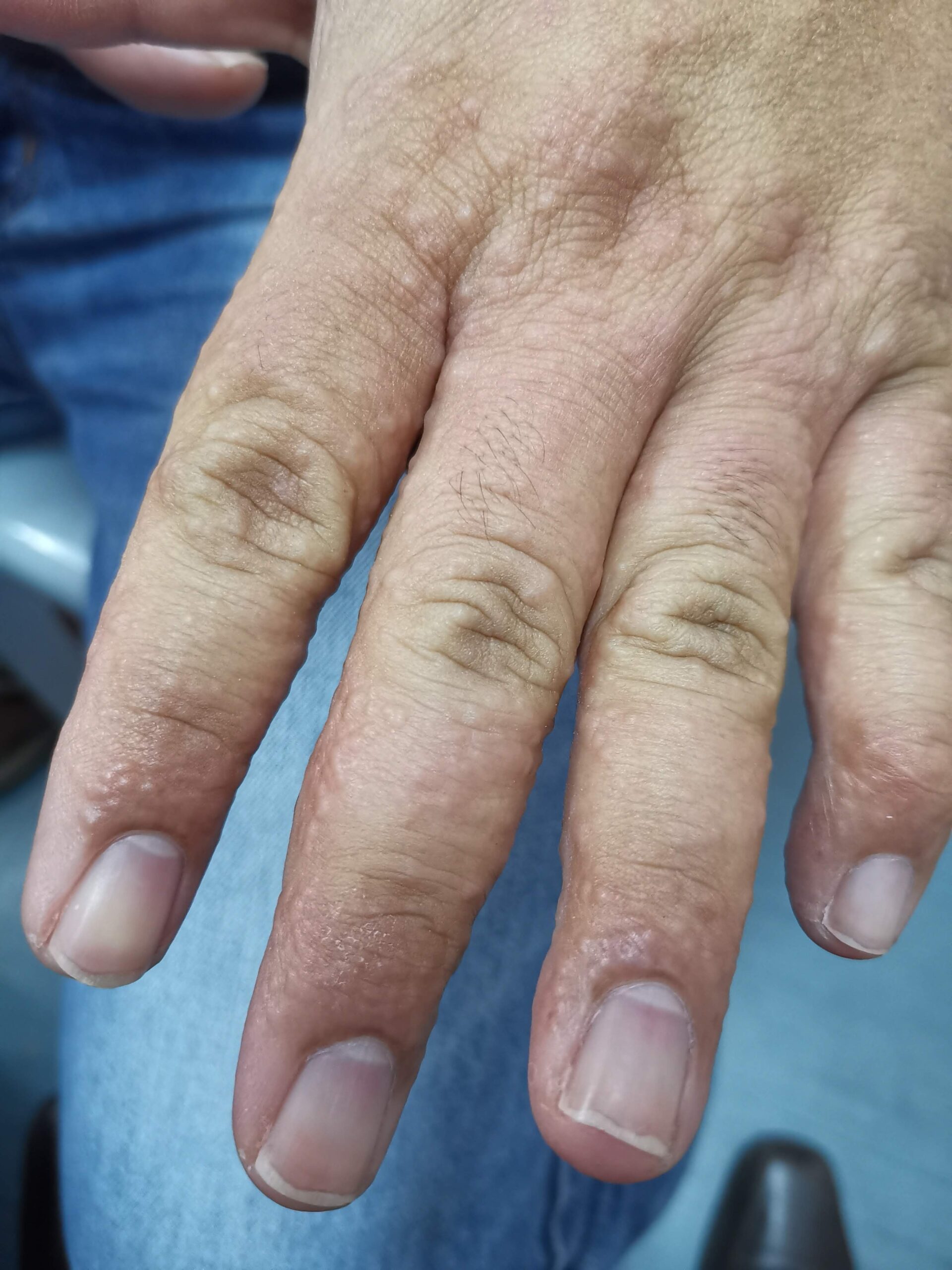
4. How effective is lebrikizumab?
In two phase 3 clinical trials, ADvocate 1 and ADvocate 2 (published in the New England Journal of Medicine in 2023)[1], approximately 33–43% of patients achieved clear or almost-clear skin at week 16, based on the investigators’ global assessment. Approximately 52–59% achieved at least a 75% improvement in their Eczema Area and Severity Index (EASI) score during the same period.
These results are encouraging, but they represent outcomes from clinical trials, not guaranteed results for every patient. Some people improve substantially, while others may have a partial response or may not respond sufficiently.
Your dermatologist will assess changes in itching, skin inflammation, sleep and overall quality of life to determine whether treatment is working.
5. What are the possible side effects of lebrikizumab?
1. Eye inflammation
Conjunctivitis, or inflammation of the surface of the eye, has been reported. Symptoms may include redness, itching, irritation or discomfort. Contact your doctor if you develop new or worsening eye symptoms.
2. Injection-site reactions
Some patients may experience redness, swelling, pain or discomfort where the injection is given.
3. Cold sores and other infections
Herpes-related infections, including cold sores, may occur. Your doctor can advise you about infection risks and what to do if symptoms develop.
4. Allergic reactions
Serious allergic reactions are possible but uncommon. Seek urgent medical attention if you experience difficulty breathing, swelling of the face or throat, or other symptoms suggesting a severe allergic reaction.
6. Lebrikizumab dose and age: How is it given?
Age and weight requirements
Under the US and European approvals, lebrikizumab is indicated for adults and adolescents aged 12 years and older who weigh at least 40 kg with moderate-to-severe atopic dermatitis. It is not currently approved for children under 12 years old, or for adolescents who weigh less than 40 kg.
Local prescribing criteria in Malaysia may differ, so your dermatologist will confirm whether you or your child are eligible.
Standard dosing schedule
| Phase | When | Dose |
|---|---|---|
| Loading dose | Week 0 and week 2 | 500 mg each time (two 250 mg injections) |
| Initial treatment | Every 2 weeks from week 4 until week 16 | 250 mg (one injection) |
| Maintenance | Every 4 weeks, once an adequate response is achieved (usually from week 16) | 250 mg (one injection) |
Lebrikizumab comes as a 250 mg/2 mL single-dose prefilled pen or syringe. It is injected under the skin of the thigh or abdomen (avoiding the area around the navel), or the back of the upper arm if given by a carer or healthcare provider. After proper training, some patients may self-inject at home if their doctor agrees.
7. Lebrikizumab vs dupilumab: What is the difference?
Dupilumab is another established biologic treatment for moderate-to-severe atopic dermatitis. Although both medicines target pathways involved in eczema inflammation, they work differently.
Lebrikizumab
- Specifically blocks IL-13.
- Reduces signalling from this inflammatory protein.
- Given by injection.
- Maintenance: one injection every 4 weeks.
- Approved from age 12 (at least 40 kg).
Dupilumab
- Blocks the IL-4 receptor alpha pathway.
- Interferes with signalling from both IL-4 and IL-13.
- Also given by injection.
- Maintenance (adults): one injection every 2 weeks.
- Approved for atopic dermatitis from 6 months of age.
Both medicines can improve eczema in suitable patients. However, their trial results should not be compared directly as if they were tested against each other in the same study.
There is no single biologic that is best for every patient. The choice depends on disease severity, previous treatment response, other medical conditions, potential side effects, availability, cost and patient preferences. A dermatologist can help you compare these options and decide on an appropriate treatment plan.
8. Lebrikizumab vs eczema creams: Do I still need moisturisers?
Eczema affects the skin barrier, allowing moisture to escape and making the skin more vulnerable to irritation. Moisturisers help maintain the barrier and reduce dryness.
Depending on your condition, your treatment plan may still include:
- Regular moisturisers.
- Topical corticosteroids or other prescription anti-inflammatory creams when indicated.
- Gentle cleansing and suitable skincare.
- Avoidance of personal triggers where possible.
- Follow-up to monitor treatment response and side effects.
A biologic is not a replacement for every aspect of eczema management. Your dermatologist will determine which treatments should be continued alongside it.
9. Is lebrikizumab available in Malaysia?
Patients often ask whether lebrikizumab can be obtained in Malaysia. It is now available, but access, prescribing arrangements and cost can vary between hospitals and clinics.
Before starting treatment, ask your dermatologist to explain:
- Whether you meet the prescribing criteria for lebrikizumab.
- The expected treatment cost, including the loading doses and maintenance injections.
- How often you will need follow-up visits.
- Whether you can be trained to self-inject at home.
10. Can lebrikizumab cure eczema permanently?
Lebrikizumab can help control eczema inflammation and symptoms while treatment is effective. However, some patients may experience a recurrence of symptoms if treatment is interrupted or discontinued.
Long-term management usually involves a combination of appropriate medication, moisturising, skincare, trigger management and medical follow-up. The aim is to achieve sustained disease control, reduce flare-ups and improve quality of life.
11. Where can I get specialist eczema treatment in Malaysia?
A dermatologist can review your symptoms, confirm the diagnosis, assess disease severity and discuss suitable treatment options, including advanced therapies when appropriate.
Loh & Celine Skin Specialist Clinic — Alor Setar, Kedah
Looking for a pakar kulit (dermatologi) in Alor Setar? At Loh & Celine Skin Specialist Clinic in Alor Setar, Kedah, Dr Loh Ken Chen, Consultant Dermatologist, assesses eczema severity, previous treatments and individual treatment needs. The aim is to develop a personalised treatment plan based on your condition, medical history and available treatment options.
Learn more about our eczema assessment and treatment services or contact our clinic to arrange an appointment.
LiV Skin Specialist Clinic — Bukit Jalil and Sungai Petani
Patients in other parts of Malaysia can also explore LiV Skin Specialist Clinic, with locations in Bukit Jalil, Kuala Lumpur, and Sungai Petani, Kedah. Contact the relevant branch to enquire about eczema assessment, available dermatology services and appointment arrangements.
12. Final thoughts
By targeting IL-13, lebrikizumab can help many suitable patients achieve better control of itching and skin inflammation. However, accurate diagnosis, individual assessment and regular follow-up remain essential.
If eczema is affecting your sleep, work or quality of life despite appropriate treatment, consider consulting a dermatologist to discuss the available options.
Eczema still not under control?
See a Consultant Dermatologist in Alor Setar for a full eczema assessment and a personalised treatment plan, including whether advanced treatment is suitable for you.
Book an Appointment Eczema Treatment Options13. Frequently asked questions
Is lebrikizumab a steroid?
How quickly does lebrikizumab work?
Can lebrikizumab be used for mild eczema?
What is the minimum age and dose for lebrikizumab?
Is lebrikizumab better than dupilumab?
Do I need to take lebrikizumab forever?
Should I see a dermatologist if my eczema keeps returning?
References
- Silverberg JI, Guttman-Yassky E, Thaçi D, et al. Two Phase 3 Trials of Lebrikizumab for Moderate-to-Severe Atopic Dermatitis. N Engl J Med. 2023;388:1080–1091. NEJM
- U.S. Food and Drug Administration. EBGLYSS (lebrikizumab-lbkz) injection: Prescribing Information. Eli Lilly and Company; 2024.
- European Medicines Agency. Ebglyss (lebrikizumab): European Public Assessment Report. EMA
- U.S. Food and Drug Administration. DUPIXENT (dupilumab) injection: Prescribing Information. Regeneron Pharmaceuticals.

Dr Loh Ken Chen
M.B.B.S. (Malaya), MRCP (UK), Advanced Master of Dermatology (UKM)
National Specialist Register (NSR) No. 133112
Dr Loh Ken Chen is a Consultant Dermatologist with extensive experience in medical and aesthetic dermatology. He previously served as Head of the Department of Dermatology at Hospital Sultanah Bahiyah, Alor Setar, and has clinical interests in psoriasis, eczema, acne, pigmentation and complex skin conditions. His approach focuses on accurate diagnosis, evidence-based treatment, and care tailored to each patient’s skin condition and needs.
Practises at: Kedah Medical Centre, Hospital Pantai Sungai Petani & Liv Skin Specialist Clinic.
Medical disclaimer: This article is for educational purposes and does not replace an individual medical consultation. Treatment decisions should be made with a qualified healthcare professional.