
Ozempic Face, Loose Skin and Hair Loss After GLP-1 Injections: A Dermatologist’s Guide
Does your face look older, thinner or more tired after losing weight with Ozempic or Mounjaro? You are not alone. More people in Malaysia now use GLP-1 medicines for diabetes and weight loss, and many notice changes in their face, skin and hair – often called “Ozempic face”.
The good news: these changes are usually caused by weight loss itself, not by the medicine damaging your skin. And there are safe ways to prevent and treat them. As a skin specialist (dermatologist) in Alor Setar, I will explain why it happens and what you can do.
IN THIS ARTICLE
1. What Are GLP-1 Injections?
GLP-1 stands for glucagon-like peptide-1, a hormone your body makes after eating. GLP-1 medicines copy this hormone. They help control blood sugar, reduce appetite and slow down how fast your stomach empties. So you feel full sooner and eat less.
Common GLP-1 medicines include:
- Semaglutide: Ozempic and Wegovy
- Tirzepatide: Mounjaro
- Liraglutide: Saxenda
Each medicine has its own approved uses and doses. Some are for type 2 diabetes. Some are also approved for long-term weight management.
2. What Is “Ozempic Face”? Why Does the Face Look Older?
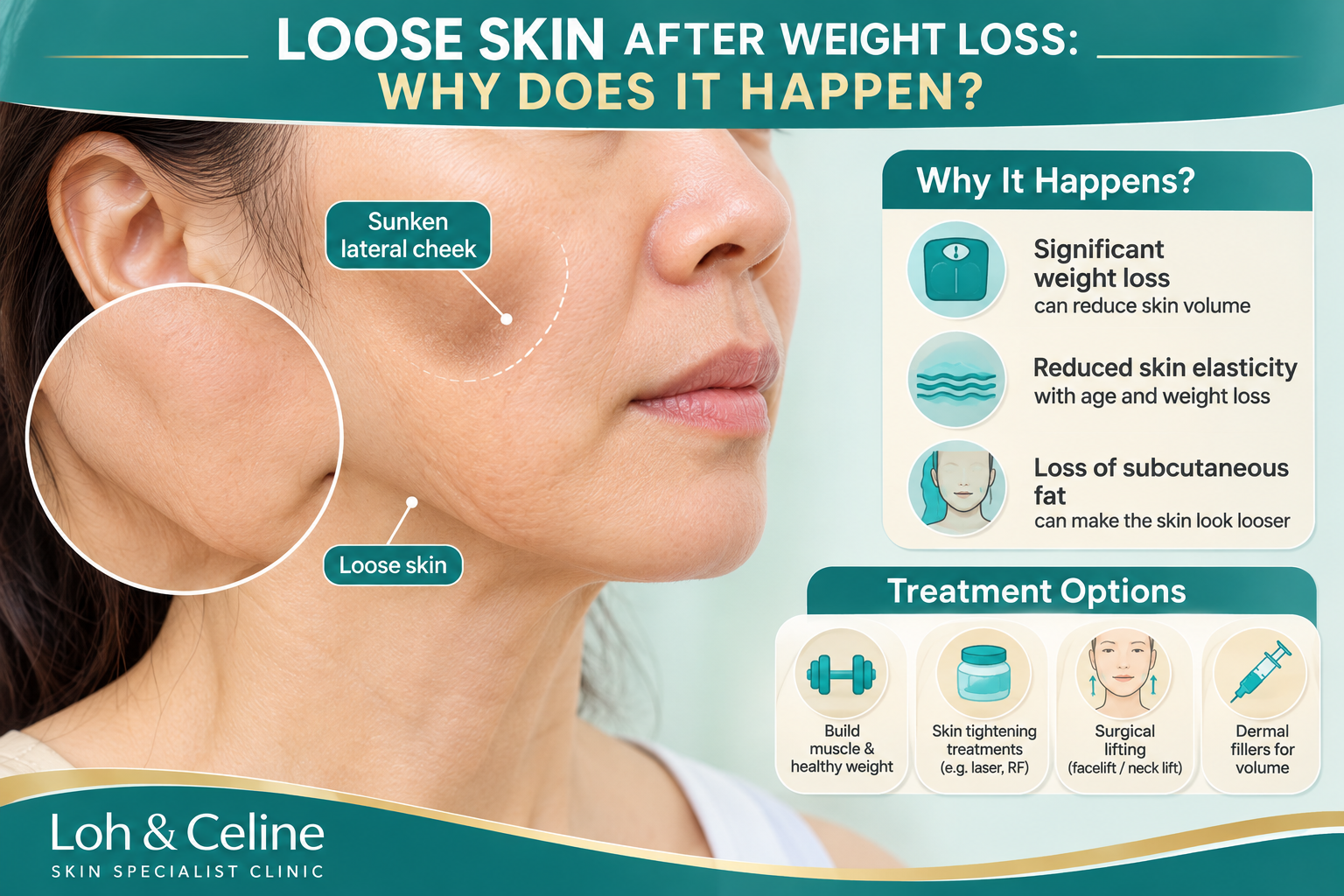
Your face has pads of fat under the skin. They fill out your cheeks, temples, under-eye area and jawline, and help you look young. When you lose a lot of weight, you also lose some of this facial fat.
This can cause:
- Hollow or sunken cheeks
- Dips at the temples (sides of the forehead)
- Deeper lines from the nose to the corners of the mouth
- More lines around the mouth
- A less sharp face shape
- A tired or older look
How much you notice depends on your age, genes, how firm your skin was before, and how much weight you lost. The same changes can happen after weight-loss surgery or after losing weight through diet and exercise. It is not only an Ozempic problem.
3. Loose and Sagging Skin After Weight Loss
Your skin stays firm and springy because of two proteins: collagen and elastin. When you gain weight, the skin stretches. After you lose a lot of weight, the skin may not shrink back completely.
You may notice loose skin on the lower face and jawline, the neck, tummy, upper arms and thighs, and more skin folds.
Younger people with firm skin usually bounce back better. Older people, or those who were overweight for many years, are more likely to have loose skin that stays.
4. Hair Loss on Ozempic or Mounjaro
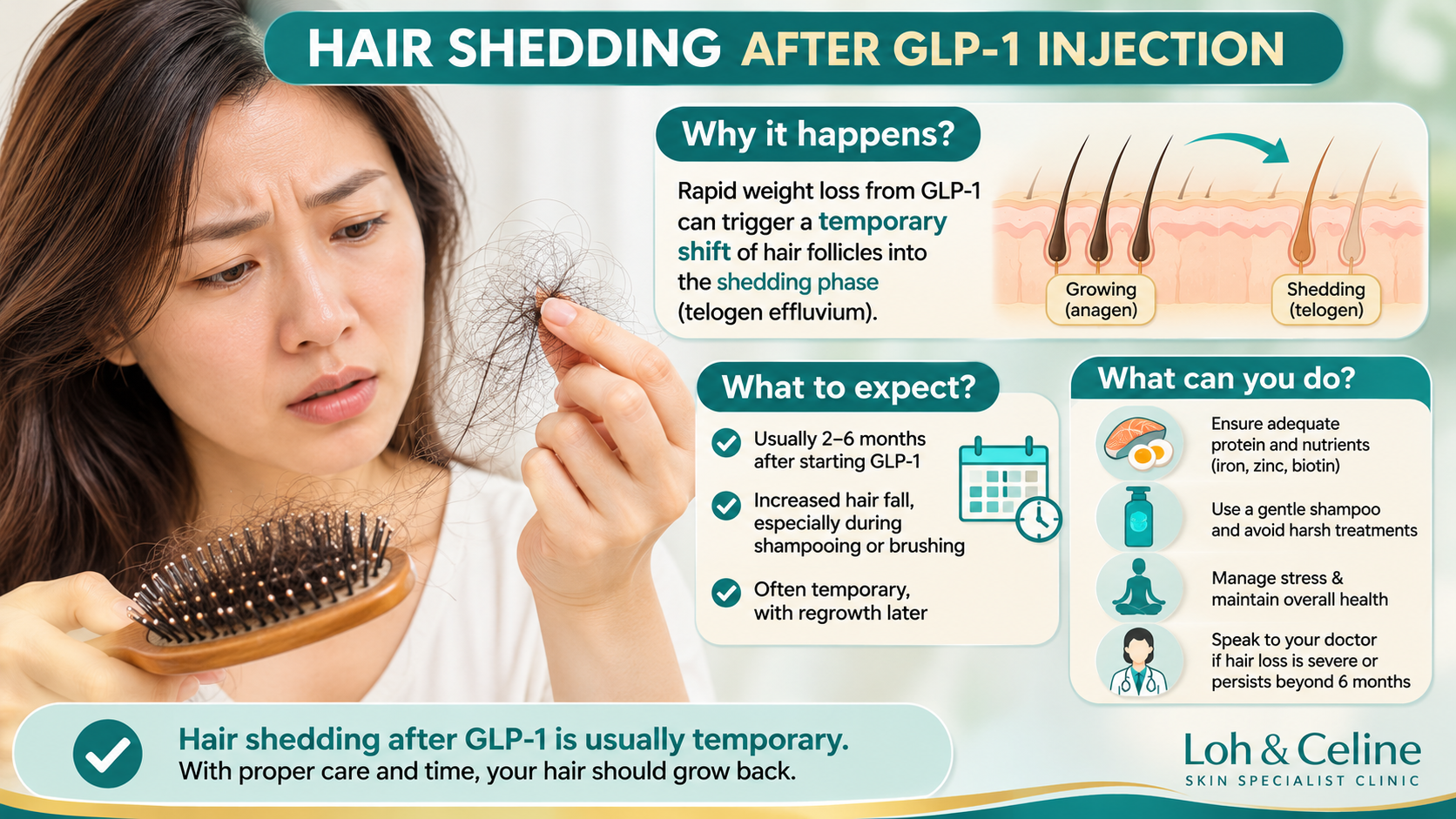
Some people see more hair falling out while losing weight on GLP-1 medicines. A common reason is telogen effluvium. This is when more hairs than usual go into a “resting” stage at the same time, and then fall out.
Common triggers are:
- Losing weight quickly or losing a lot of weight
- Eating too few calories
- Not eating enough protein
- Low iron or other missing nutrients
- Physical stress on the body
The shedding usually starts a few months after the trigger, not right after you start the medicine.
5. Does GLP-1 Treatment Make Skin Dry or Thin?
Some people say their skin looks drier, less firm or dull while losing weight. This is more likely caused by eating less, not enough protein, not drinking enough water, or missing nutrients.
Good nutrition matters while you lose weight. If you find it hard to eat enough, talk to your doctor or a dietitian.
6. How to Protect Your Skin While Losing Weight
- Lose weight steadily, with your doctor’s guidance. Very fast weight loss can make face hollowing and loose skin worse. Never increase your dose on your own to lose weight faster.
- Eat enough protein. Protein helps keep your muscles and helps your body repair tissue.
- Don’t starve yourself. Eating too little can lead to low nutrients and hair loss. Eat balanced meals even when you are not hungry.
- Drink enough water. If you have kidney or heart problems, ask your doctor how much is right for you.
- Do strength exercises if you can. Weights or resistance bands help you keep muscle while losing fat.
- Keep a simple skincare routine. Use a gentle cleanser, a moisturiser and broad-spectrum sunscreen every day.
7. Treatment Options for Ozempic Face and Loose Skin
Not everyone needs a cosmetic treatment. Your doctor should look at how much weight you lost, your age, your face shape, your skin quality, and whether your weight is still changing.
A. Skin tightening. For mild to moderate loose skin, energy-based treatments may help firm the skin. These include radiofrequency (RF), RF microneedling, ultrasound (HIFU) and some lasers. At our clinic, we may suggest Sylfirm X RF microneedling or Linear Z HIFU after an assessment. But these cannot replace a lot of lost face fat or remove large amounts of extra skin. Results vary from person to person.

B. Skin boosters and collagen-stimulating treatments. These may help with dull skin, fine lines and dryness. They do not replace lost face volume.
C. Dermal fillers. If your main concern is hollow cheeks, sunken temples or a loss of face support, carefully chosen dermal fillers may help. The aim is a natural, balanced look, not an overfilled face.
D. Surgery. If you have a lot of extra skin after major weight loss, you may need to see a plastic surgeon. Non-surgical treatments cannot reliably remove large amounts of skin.
8. Should You Stop Ozempic or Mounjaro Because of Skin Changes?
These medicines can bring important health benefits for people with type 2 diabetes or weight-related health problems. If you notice skin changes or hair loss, tell your doctor. Your treatment plan may need a review, especially if you are losing weight too fast or not eating enough.
9. When Should You See a Dermatologist?
- Your face looks hollow or your skin sags after weight loss
- Your hair keeps falling out or is falling out a lot
- You have a rash or skin change that does not go away
- Your skin quality has become much worse
- You want advice on which skin tightening or face treatment suits you
A dermatologist can tell whether the changes are from weight loss or from another skin or hair condition, and advise on the right next step.
Skin and Aesthetic Assessment in Alor Setar, Kedah
At Loh & Celine Skin Specialist Clinic, you will be seen by Dr Loh Ken Chen, Consultant Dermatologist (NSR No. 133112), and Dr Celine Tan Huey Chuen, LCP-certified Aesthetic Physician. We help you find the right approach for skin, hair and face changes after weight loss.
📍 18, Tingkat Bawah, Kompleks Perniagaan Gangsa, Jalan Gangsa, 05150 Alor Setar, Kedah · 📞 04-731 5711 / 016-291 5711
Book via WhatsApp Call 04-731 571110. Frequently Asked Questions
What is Ozempic face?
Does Ozempic make your face sag?
Is Mounjaro face the same as Ozempic face?
Can you get Ozempic face from Wegovy or Saxenda too?
How much weight loss causes Ozempic face?
Can I prevent Ozempic face?
Will my face go back to normal after stopping Ozempic?
Can HIFU help with Ozempic face?
Are fillers safe for Ozempic face?
Can skin boosters fix loose skin after weight loss?
When is the best time to start treatment?
Do I need surgery for loose skin?
Does semaglutide cause hair loss?
How long does hair loss last after weight-loss injections?
What can I do about hair loss while on Ozempic or Mounjaro?
Does Ozempic cause dry skin?
Should I stop Ozempic because of skin changes?
What skin signs mean I need urgent help?
Where can I get Ozempic face treatment in Alor Setar, Sungai Petani or Kuala Lumpur?

Dr Loh Ken Chen
M.B.B.S. (Malaya), MRCP (UK), Advanced Master of Dermatology (UKM)
National Specialist Register (NSR) No. 133112
Dr Loh Ken Chen is a Consultant Dermatologist with extensive experience in medical and aesthetic dermatology. He previously served as Head of the Department of Dermatology at Hospital Sultanah Bahiyah, Alor Setar, and has clinical interests in psoriasis, eczema, acne, pigmentation and complex skin conditions. His approach focuses on accurate diagnosis, evidence-based treatment, and care tailored to each patient’s skin condition and needs.
Practises at: Kedah Medical Centre, Hospital Pantai Sungai Petani & Liv Skin Specialist Clinic.
This article is for general education only and does not replace a personal medical consultation. GLP-1 medicines should only be used under proper medical supervision.