
Psoriasis Treatment in Alor Setar, Kedah: A Complete Guide
Quick answer: Psoriasis is a long-term, immune-driven skin condition — not an infection and not simply dry skin. It cannot be caught from towels or handshakes. While there is no permanent cure yet, modern treatments (especially biologic injections) can clear the skin so completely that most patients live with little or no visible disease.
Where to get treated: At Loh & Celine Skin Specialist Clinic in Alor Setar, our dermatologists treat psoriasis every week for patients across Kedah, Perlis and Penang — from creams and phototherapy to the latest IL-23, IL-17 and TNF biologics.
Psoriasis is often mistaken for very dry skin or a stubborn allergy, so many patients spend months buying different moisturisers (pelembap) that never work. The truth is that psoriasis starts on the inside, with an overactive immune system — which is why it needs proper medical care from a pakar kulit (dermatologist) rather than creams alone.
What Is Psoriasis?
To understand what is happening beneath the skin, it helps to use a simple picture.
The “Little Soldiers” Analogy
Imagine your immune cells are a squad of brave little soldiers whose only job is to fight off viruses and bacteria. In psoriasis, these soldiers get confused and mistake your own healthy skin for the enemy. They “set fire” to the skin — causing the red, burning inflammation — and your body panics and grows new skin cells at super-speed. Because the skin grows too fast to shed normally, dead cells pile up into those thick, silvery, flaky patches. The goal of treatment is simple: calm the soldiers down.
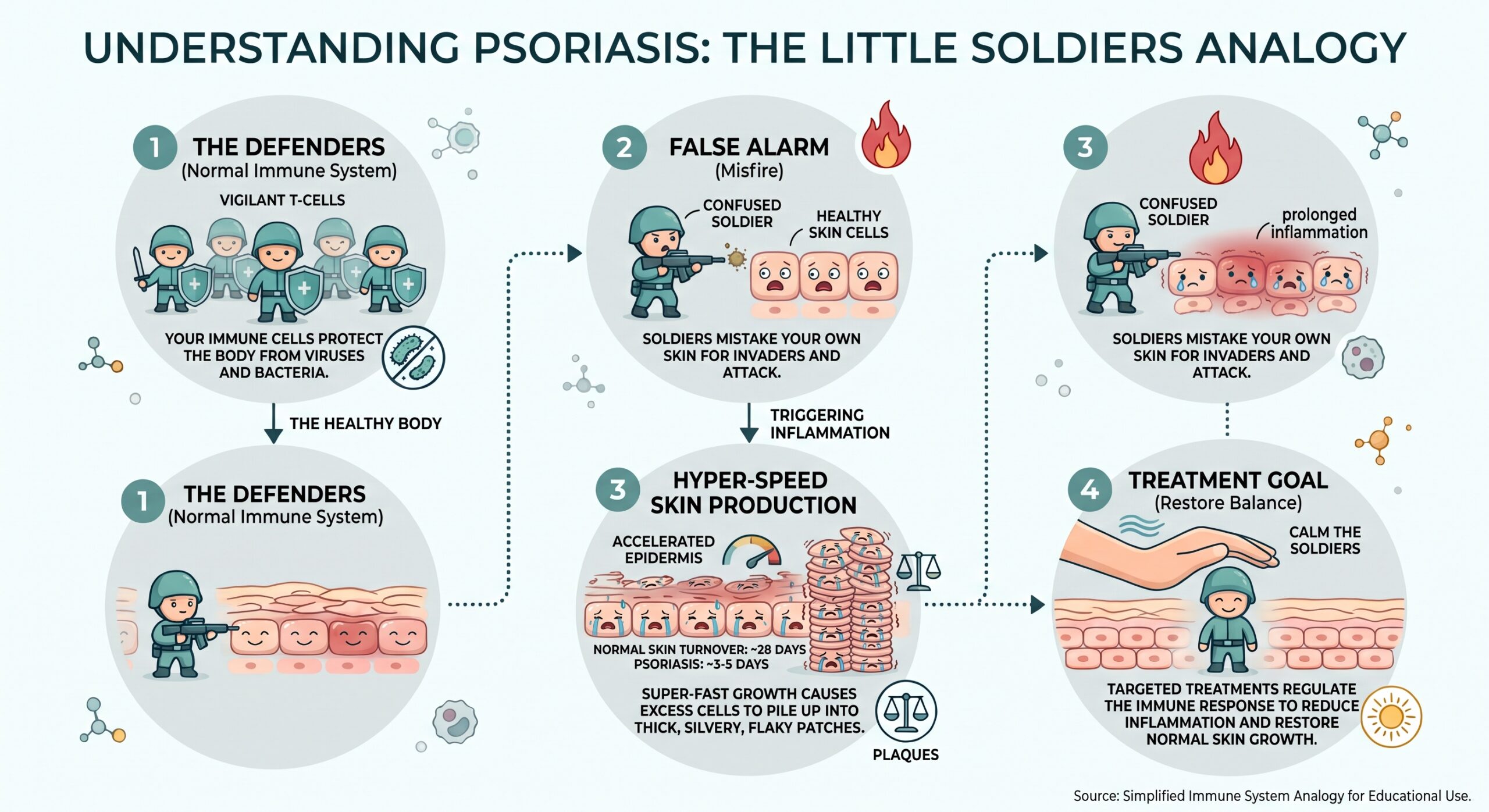
Deep Dive: What You Need to Know
First, psoriasis is not infectious. You cannot catch it from someone else, and you cannot give it to your family by sharing towels or holding hands. It is an autoimmune condition — your body is technically reacting against itself from the inside. Because the root cause hides deep in the immune system, ordinary skincare creams and over-the-counter beauty products cannot solve it. You need medical treatments that target these confused little soldiers.
Signs and Symptoms: How to Spot It
Psoriasis usually appears as thick, raised patches of skin (plaques) covered with silvery-white scales, often on the elbows, knees, scalp and lower back. In our hot, humid Malaysian weather, sweating can make the itch and irritation feel much worse. Browse real examples below.
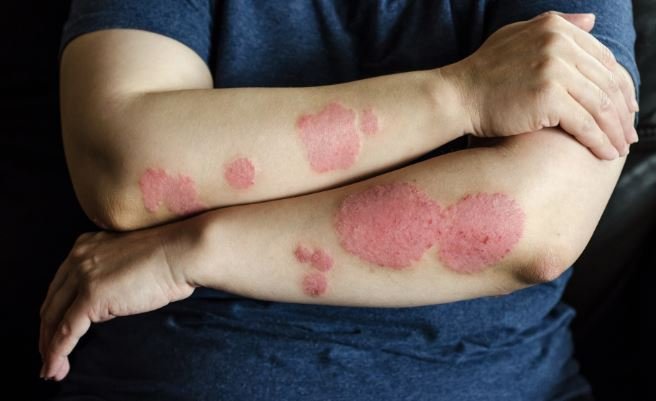 Plaque psoriasis on both forearms
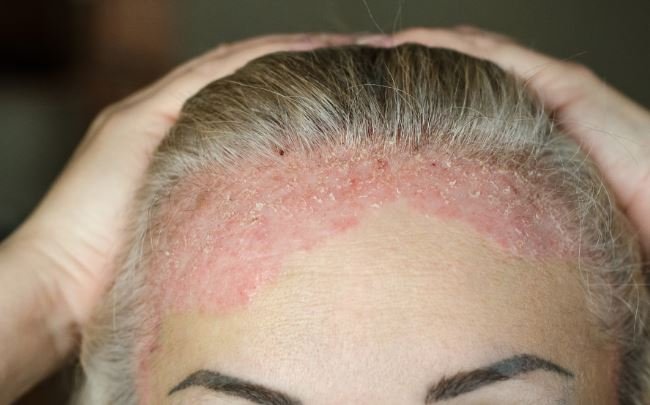 Scalp psoriasis at the hairline
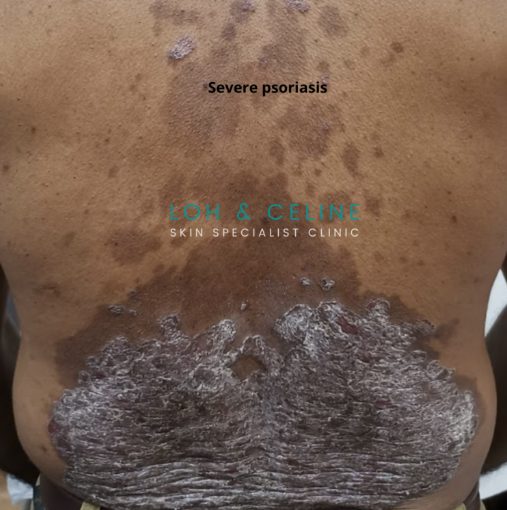 Plaques on the lower back
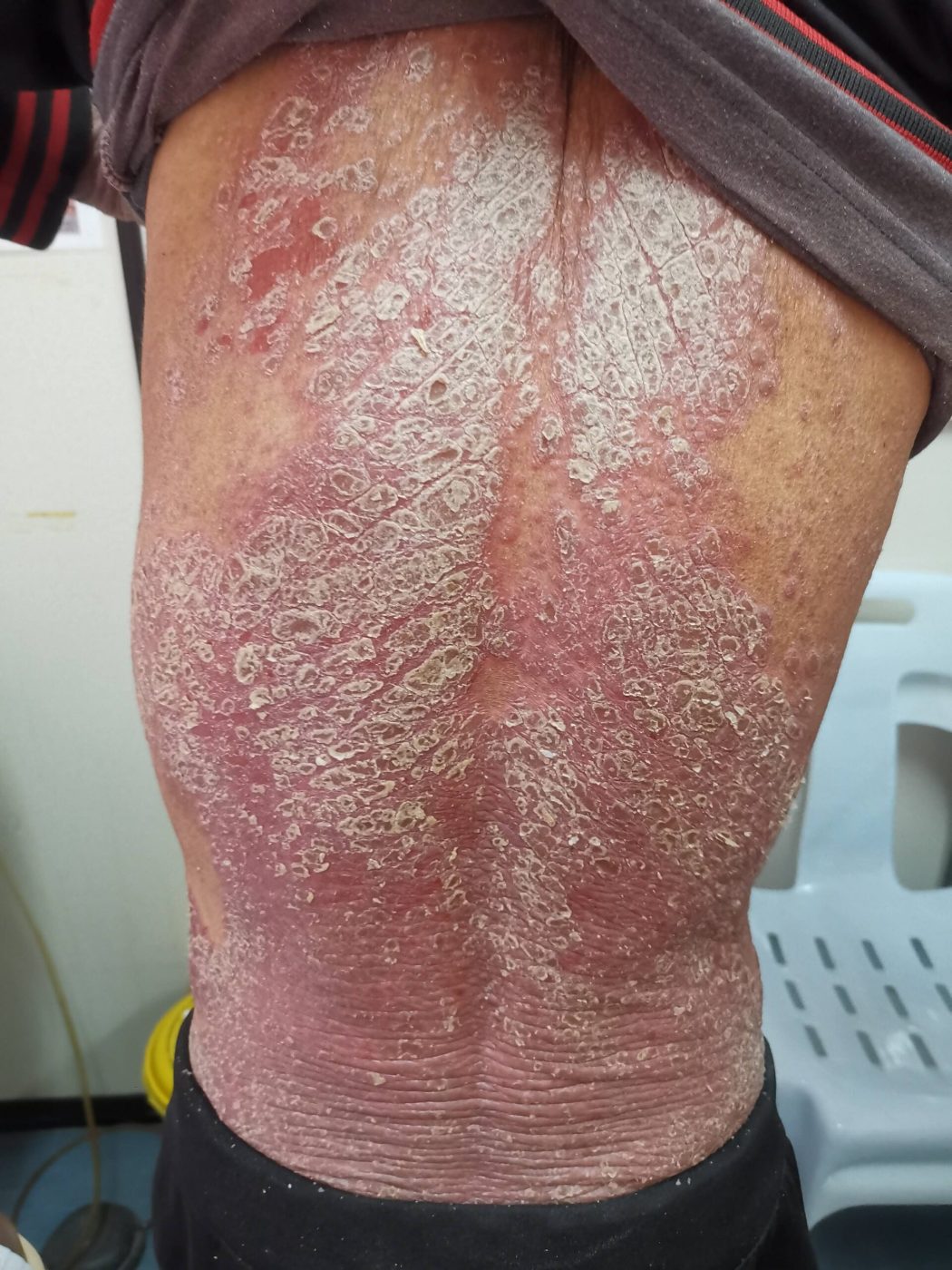 Severe plaque psoriasis on the back
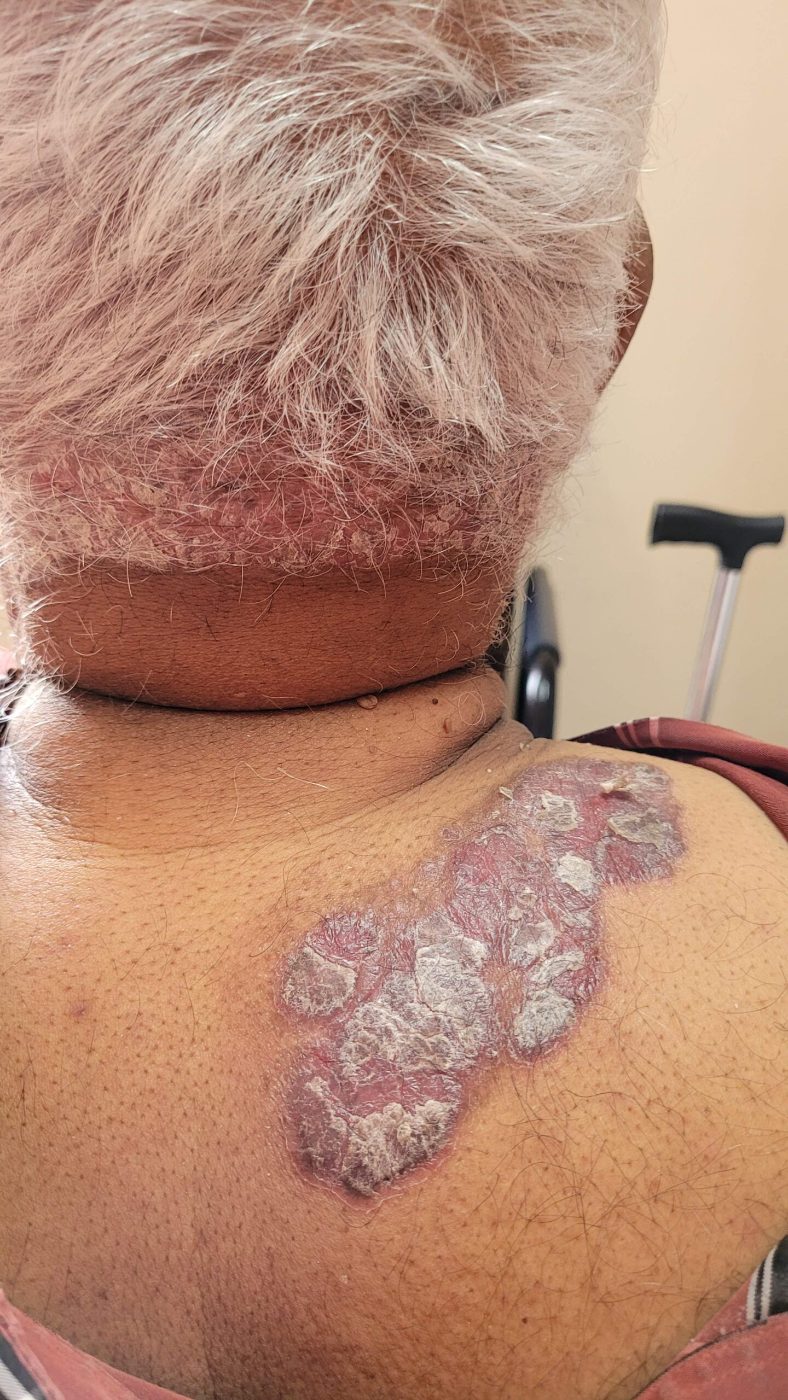 Plaque on the nape & upper back
Look out for these signs:
- Plaques: thick, red or pink patches covered with silvery, flaky scales — often itchy, and sometimes cracking or bleeding.
- Scalp psoriasis: heavy flaking on the head that is often mistaken for dandruff, but anti-dandruff shampoos will not clear it because the buildup goes much deeper.
- Nail changes: pitting (small dents), thickening, crumbling or yellowing of fingernails and toenails — frequently misdiagnosed as a stubborn fungal nail infection.
- Joint symptoms: stiff, swollen or painful joints, especially in the mornings. This can signal psoriatic arthritis, where the inflammation attacks the joints.
- Hidden inflammation: because psoriasis causes constant, body-wide inflammation, moderate-to-severe disease is linked to a higher risk of heart disease if left untreated.
Symptoms tend to come and go in cycles of flares and remission, and can be triggered by stress, infection, cold weather or certain medications.

A perspective from
Dr Loh Ken Chen
“When a patient sits in front of me, I am not only looking at the plaques on their skin. I am looking at how tired they are, how the itch has stolen their sleep, and what the inflammation may be quietly doing inside their body.”
In more than 10 years of treating psoriasis in Kedah, the cases that stay with me are the ones that were made worse by the wrong first steps. Two patterns cause the most avoidable harm, and I raise them with every new patient.
Diagnosed late, after the wrong treatments
Many patients reach me only after months or years of being told it is “just eczema” or dry skin, or after relying on traditional and over-the-counter remedies that never target the real, immune-driven cause. By then the plaques are thicker, the joints may already be involved, and their confidence is worn down. Getting the correct diagnosis early genuinely changes the outcome.
The hidden danger of steroid injections and drips
One of the most damaging mistakes I see is psoriasis being “treated” with a systemic steroid injection or IV drip. The skin may clear for a week or two, which feels miraculous — but once the steroid wears off the psoriasis often rebounds far worse than before, sometimes turning stable plaques into a widespread, unstable or even pustular flare. That is why we avoid systemic steroids for psoriasis and instead use targeted treatments that calm the immune system safely.
Causes and Risk Factors
Psoriasis is an immune-mediated condition — not an infection and not a result of poor hygiene. Normally skin cells renew about once a month, but in psoriasis the confused immune “soldiers” force the skin to renew in just a few days, creating the thick, scaly plaques. Common triggers and risk factors include:
- Family history — psoriasis often runs in families.
- Stress — one of the most powerful triggers for a flare (more on this below).
- Infections such as strep throat, which can set off guttate psoriasis.
- Skin injury — cuts, sunburn or scratching can trigger new patches (the Koebner phenomenon).
- Lifestyle factors — smoking, heavy alcohol use and excess weight.
- Certain medications and, for some people, cold, dry weather.
Because the root cause is internal, lasting control usually comes from calming the immune system — which is exactly what our dermatologists focus on.
Types and Classification
There are several forms of psoriasis, and identifying the right one guides treatment:
For more on each type and where psoriasis can appear on the body, see the National Psoriasis Foundation’s guide to psoriasis locations and types.
When Should You See a Dermatologist?
We recommend seeing a pakar kulit if you have thick, scaly patches that will not clear, itching or cracking that affects daily life, nail changes, joint pain or stiffness, or if moisturisers simply are not working. Patients from Kedah, Perlis and Penang often wait too long — the sooner psoriasis is assessed, the easier it is to control and the lower the risk of joint damage. Persistent, spreading or more extensive psoriasis, especially with nail or joint changes, is a clear sign to see a pakar kulit di Alor Setar so the treatment approach can be matched to its severity.
How Dermatologists Diagnose It
Psoriasis is usually diagnosed through a clinical skin examination, where our dermatologists assess the appearance, location and pattern of the plaques, along with your nails and any joint symptoms. A detailed history of triggers, family history and previous treatments helps guide the plan. In uncertain cases a small skin biopsy may confirm the diagnosis and rule out eczema or fungal infection, and we screen for psoriatic arthritis where relevant.
How Do We Treat It? (Calming the Soldiers)
We cannot change your genetics, but modern medicine gives us powerful ways to calm the immune system and clear the skin. Treatment is matched to the type and severity of your psoriasis, and we usually build it up step by step — from gentle to game-changing.
1. Creams & Ointments — “The Local Handbrake”
How it works: Applied directly to the skin, these calm the specific spots that are flaring. The main options are medical steroid creams (matched in strength to the body area), Vitamin D creams (calcipotriol) that slow skin-cell overgrowth, coal tar, salicylic acid to lift thick scale, and calcineurin inhibitors (tacrolimus, pimecrolimus) for delicate areas such as the face and skin folds. Combination calcipotriol-plus-steroid gels are often the most convenient.
2. Phototherapy — “Medical Light Therapy”
How it works: A special, safe medical UV machine delivers narrowband UVB — a controlled, healthy “dose of sunshine” that tells the overactive skin factory to slow its production line. A targeted excimer light can treat stubborn, localised patches. This is not the same as a tanning bed, and doses are carefully measured by our team.
3. Systemic Pills — “The Master Switchboard”
How it works: When creams cannot control a flare because it is too widespread, oral medicines work throughout the body to turn inflammation down.
- Methotrexate — a reliable, long-standing weekly medicine that stops skin cells multiplying too fast; taken with folic acid.
- Apremilast — a newer pill that targets specific chemical signals (PDE4) inside cells; no routine blood tests needed.
- Acitretin — a retinoid that is especially useful for pustular psoriasis.
- Ciclosporin — fast-acting for severe flares, used as a short-term “rescue.”
4. Biologic Injections — “The Precision Smart-Bombs”
How it works: For moderate-to-severe psoriasis, biologics are game-changers. If traditional pills are like switching off the electricity to the whole factory just to stop one machine, biologics are like hiring a high-tech technician to switch off only the one broken switch. They precisely block the exact proteins driving the skin into overdrive.
The modern biologics we use:
- IL-23 inhibitors (Risankizumab, Guselkumab, Tildrakizumab) — target the main “boss” protein that starts the inflammation. Very long-lasting clear skin, often just one injection every 2–3 months.
- IL-17 inhibitors (Secukinumab, Ixekizumab, Bimekizumab) — block the proteins causing redness and flaking, clearing skin remarkably fast.
- TNF-alpha inhibitors (Adalimumab, Etanercept, Infliximab) — excellent when you have both skin psoriasis and painful, swollen joints.
Want to know which biologic and injection schedule suits you best? Read our detailed guide on biologic treatment for psoriasis in Alor Setar for the full list of modern injections and dosing schedules.
Your Treatment Options at a Glance
Creams & Ointments
“The Local Handbrake” — steroid, coal tar & Vitamin D creams for mild, localised flares.
Phototherapy
“Medical Light Therapy” — safe narrowband UVB that slows the overactive skin factory.
Systemic Pills
“The Master Switchboard” — Methotrexate & Apremilast for more widespread psoriasis.
Biologic Injections
“The Precision Smart-Bombs” — IL-23, IL-17 & TNF blockers for moderate-to-severe cases.
Important safety warning: avoid steroid pills & injections
Do not take oral steroids or receive a steroid injection or IV drip to treat psoriasis. They may clear the skin briefly, but when stopped they can trigger a severe “rebound” flare — sometimes turning stable psoriasis into a widespread, unstable or pustular form. Psoriasis should always be managed by a dermatologist using safe, targeted treatments.
Stress: The Skin’s Biggest Enemy
Stress is one of the most powerful triggers for a psoriasis flare, creating a frustrating cycle: stress worsens the skin, and the visible skin causes more stress. When you are stressed, your body releases chemicals like cortisol that act like pouring petrol onto a fire, ordering the skin factory to speed up. Managing stress through rest, gentle exercise, 7–8 hours of good sleep and support is a genuine part of treatment — not just “nice to have.” In our warm, humid northern climate, staying cool and protecting the skin from injury and sunburn also helps keep flares at bay.
You are not alone. For peer support, community and patient resources in Malaysia, the Psoriasis Association of Malaysia is a helpful place to connect with others living with psoriasis.
Related Conditions
Psoriasis is often confused with eczema, seborrhoeic dermatitis or fungal infection (kurap), which can look similar but need different treatment. It is also linked to psoriatic arthritis and metabolic conditions. If you are unsure whether your patches are psoriasis or something else, compare with our Psoriasis Treatment Guide or get an accurate in-clinic diagnosis.
Prevention and Self-Care
While psoriasis cannot be fully prevented, you can reduce flares by moisturising daily, avoiding skin injury and sunburn, managing stress, maintaining a healthy weight, limiting alcohol, stopping smoking, and treating infections promptly. Staying consistent with prescribed treatment — even when the skin looks better — is key to lasting control.
Trusted Medical References
This guide reflects widely accepted dermatological understanding of psoriasis and is for general education only — it is not a substitute for personalised medical advice. For further authoritative reading, see the American Academy of Dermatology (AAD) Psoriasis Resource Center, the UK NHS guide to Psoriasis, and the Mayo Clinic diagnosis & treatment guide. For an assessment tailored to your skin, please consult our dermatologists in Alor Setar.
Frequently Asked Questions
Real questions we hear from psoriasis patients in Alor Setar — tap each one to expand the answer:
Is psoriasis contagious? Can I catch it from someone?
Not at all. Psoriasis is 100% not contagious. It is an internal problem with your own immune system and genetics. You cannot pass it to anyone else or catch it by touching, sharing clothes, or swimming together.
How do I know if my psoriasis is severe enough for biologics?
If your psoriasis covers a large part of your body (more than 10%), makes you feel very down or embarrassed to go out, or if normal creams are no longer helping, you should talk to a skin specialist about upgrading to systemic pills or biologics.
Are biologic injections safe?
Yes — they are highly targeted. Because they only block the specific “broken switch” instead of lowering your whole body’s defences, they are very safe for long-term use. We always run comprehensive blood tests and screen for infections such as TB and hepatitis first.
Does our hot Malaysian weather make psoriasis worse?
A little morning sun can actually help. However, excessive heat that causes heavy sweating can trap moisture in skin folds (like underarms or groin), leading to friction and painful flares. Try to stay cool and wear light clothing.
How can I tell the difference between eczema and psoriasis?
Eczema patches are usually intensely itchy, dry, bumpy and look raw or “weeping” when scratched, mostly at the inner folds of the elbows and knees. Psoriasis patches are thicker, have very clear boundaries, feature silvery flakes, and usually appear on the outside of elbows, knees and the scalp.
Can I cure my psoriasis by changing my diet?
There is no magic diet or food that can cure psoriasis. However, eating healthy foods (like fish rich in Omega-3, vegetables and whole grains) helps lower overall body inflammation, which naturally keeps your skin happier.
Will my psoriasis ever go away forever?
Psoriasis is a long-term chronic condition, meaning the genetic tendency stays. However, with modern treatments like IL-23 or IL-17 biologics, we can now help patients achieve 90% to 100% completely clear skin for many months or even years at a time.
When should I book a visit to Loh & Celine Skin Specialist Clinic?
Come see us if your skin is constantly painful or bleeding, spreading quickly, affecting your daily confidence, or if your finger and toe joints are starting to feel stiff and painful in the morning.
How much does psoriasis treatment cost in Malaysia?
It depends on the severity and the type of treatment. For mild-to-moderate psoriasis, creams and oral medicines usually cost roughly RM200–RM500 a month (plus consultation). Biologic injections are far more effective for moderate-to-severe disease but are much more expensive — often a few thousand ringgit per month or per dose, depending on the specific drug and schedule. During your consultation we explain the cost of each suitable option so you can choose what fits your needs and budget.
Can psoriasis affect my joints?
Yes. Around 20–30% of people with psoriasis develop psoriatic arthritis, where the same inflammation attacks the joints — causing stiffness, swelling and pain, often in the fingers, toes, knees or lower back and usually worse in the mornings. The skin usually flares first, but not always. Because untreated joint inflammation can cause permanent damage, tell us early if your joints feel stiff or sore so we can start the right treatment in time.
Can psoriasis be passed down to my children?
Psoriasis has a strong genetic link, so it can run in families — but it is not guaranteed. As a rough guide: if neither parent has psoriasis, a child’s risk is only about 4%; if one parent has it, the risk is roughly 15–25%; and if both parents have it, the risk can be around 50%. Genes load the gun, but triggers like stress, infection or skin injury usually pull the trigger — so many children who carry the genes never develop it.
What are the best diets for psoriasis patients?
There is no single diet that cures psoriasis, but eating to lower body-wide inflammation genuinely helps. We generally suggest a Mediterranean-style pattern — plenty of vegetables, fruit, whole grains, olive oil and oily fish rich in omega-3 (salmon, sardines, mackerel) — while cutting back on red and processed meat, sugary foods, refined carbohydrates and alcohol. Losing excess weight also makes treatment work better. If you suspect a particular food worsens your skin, keep a simple food diary and discuss it with us rather than cutting out whole food groups on your own.
Can I use a GLP-1 medicine (like semaglutide) to manage my weight if I have psoriasis?
Possibly — and it may even help your skin. GLP-1 medicines (such as semaglutide and tirzepatide) are used for obesity and type 2 diabetes, and because excess weight worsens psoriasis and lowers how well treatments work, there is growing interest in them for psoriasis patients. Early research suggests that losing weight this way may also modestly improve psoriasis and its inflammation. They are not a psoriasis treatment on their own, and whether they suit you depends on your overall health — so this should be decided together with your doctor, not started on your own.
Is weight reduction important in treating psoriasis?
Yes — very. Extra weight fuels the same inflammation that drives psoriasis, tends to make flares more severe, and can make some treatments (including certain biologics) work less well. Studies have shown that overweight patients who lose weight often see their psoriasis improve and respond better to treatment. Even a 5–10% reduction in body weight, alongside your medical treatment, can make a meaningful difference.
What is the risk of heart attack for psoriasis patients?
Psoriasis is more than skin-deep — the constant inflammation can affect blood vessels and raise the risk of heart attack and stroke, especially in moderate-to-severe disease. A landmark study by Gelfand and colleagues (JAMA, 2006) found that younger patients with severe psoriasis had about a 3× higher risk of heart attack. Overall, people with psoriasis carry roughly a 20–50% higher risk of cardiovascular events than those without, with the greatest risk in severe, long-standing disease. The good news: treating the inflammation properly — and managing blood pressure, cholesterol, weight and smoking — lowers that risk, which is exactly why we check these as part of your psoriasis care.
Clear, healthy skin is possible
Take control of your skin health today. Contact Loh & Celine Skin Specialist Clinic in Alor Setar to schedule your expert consultation.
Book a Consultation →Explore More (Related Guides)
Go deeper with our detailed psoriasis blogs and related guides:
About the Author
About the author
Dr Loh Ken Chen
M.B.B.S. (Malaya), MRCP (UK), Advanced Master of Dermatology (UKM) · National Specialist Register (NSR) No. 133112
Dr Loh Ken Chen is a Consultant Dermatologist with extensive experience in medical and aesthetic dermatology. He previously served as Head of the Department of Dermatology at Hospital Sultanah Bahiyah, Alor Setar, and has particular clinical interests in psoriasis, eczema, acne, pigmentation and complex skin conditions. His approach focuses on accurate diagnosis and personalised, evidence-based treatment based on each patient’s skin condition and individual needs.
He is currently practising as a visiting Consultant Dermatologist at Kedah Medical Centre and Hospital Pantai Sungai Petani, and is a co-founder of Loh & Celine Skin Specialist Clinic and Liv Skin Specialist Clinic.
Medical disclaimer: This article is intended for general educational purposes only and does not constitute medical advice, diagnosis or treatment. It is not a substitute for a professional consultation. Individual results and treatment suitability vary. Please consult a qualified dermatologist or your doctor regarding your specific condition before starting, changing or stopping any treatment.
Psoriasis: Common Questions — reviewed by Dr Loh Ken Chen, Dermatologist
Is it psoriasis or eczema?
Psoriasis usually forms well-defined, thick plaques with silvery scale, often on the elbows, knees and scalp, and may come with pitting of the nails. Eczema tends to be itchier, less sharply defined, and located in skin folds. Because they are treated differently, a dermatologist assessment is worthwhile.
When is psoriasis serious enough to see a dermatologist?
See a dermatologist if plaques are spreading, not responding to over-the-counter creams, or affecting large areas, the scalp or the nails, and especially if you develop joint pain or stiffness, which can be a sign of psoriatic arthritis and needs early treatment.
How is psoriasis treated?
Treatment follows a step-up approach: topical creams such as steroids and vitamin-D analogues for mild disease, phototherapy for wider involvement, and systemic or biologic therapy for moderate to severe psoriasis that does not respond to the earlier steps.