
Ruxolitinib Cream for Vitiligo in Malaysia: A New Treatment Option?
Vitiligo is a skin condition that causes white patches to develop when pigment-producing cells, known as melanocytes, are lost or stop functioning. Although vitiligo is not contagious, the visible changes can affect a person’s confidence and quality of life. This guide explains ruxolitinib cream for vitiligo and what it means for patients in Malaysia.
For many years, treatment options for vitiligo have included topical corticosteroids, calcineurin inhibitors and phototherapy. Ruxolitinib cream is a newer treatment that offers a targeted approach to restoring skin colour in some people with vitiligo. But how does ruxolitinib cream work? Is it effective, what are its side effects, and can patients access this treatment in Malaysia?
- What it is: Ruxolitinib 1.5% cream (Opzelura) is a topical JAK inhibitor, FDA-approved in the US for non-segmental vitiligo in patients aged 12 years and older.
- How well it works: In the TRuE-V trials, about 30% of patients achieved at least 75% facial improvement (F-VASI75) at week 24, and about half of those who continued treatment reached this by week 52.
- Time needed: Repigmentation is gradual and may take more than 24 weeks; the face usually responds better than the hands and feet.
- Malaysia status: Not yet registered with the NPRA; access in selected cases may only be possible through special access mechanisms, under a dermatologist’s supervision.
- Other options: Topical steroids, calcineurin inhibitors, narrowband UVB phototherapy and combination treatment remain established choices.
IN THIS ARTICLE
1. What Is Ruxolitinib Cream?
Ruxolitinib cream is a prescription medication belonging to a group of medicines called Janus kinase (JAK) inhibitors. It is marketed in the United States under the brand name Opzelura.
Ruxolitinib 1.5% cream is approved by the US Food and Drug Administration (FDA) for treating non-segmental vitiligo in adults and children aged 12 years and older.
Unlike topical corticosteroids, ruxolitinib works by targeting specific immune signalling pathways involved in vitiligo. This helps reduce the immune response that contributes to melanocyte damage and may allow pigment to return gradually.
For further information about the approved indication, visit the official US FDA website.
2. What Is Vitiligo and Why Does It Develop?
Vitiligo is a long-term skin condition characterised by white or pale patches caused by the loss of melanin, the pigment responsible for skin colour.
In non-segmental vitiligo, the most common form, patches often appear on both sides of the body. Commonly affected areas include the face, hands, arms, knees and skin around body openings.
Vitiligo is generally considered an autoimmune condition in which the immune system mistakenly targets melanocytes. The condition varies between individuals: some people develop only a few small patches, while others experience more extensive pigment loss.

Learn more on our vitiligo treatment in Alor Setar page and our overview of autoimmune skin diseases. For more information about symptoms, causes and diagnosis, visit the NHS guide to vitiligo or Mayo Clinic’s vitiligo diagnosis and treatment guide.
3. How Does Ruxolitinib Cream Work for Vitiligo?
In vitiligo, immune signals contribute to the destruction or dysfunction of melanocytes. One important signalling pathway involved in this process is the JAK–STAT pathway.
Ruxolitinib inhibits Janus kinase 1 (JAK1) and Janus kinase 2 (JAK2). By reducing certain inflammatory signals, it helps suppress the immune activity associated with melanocyte damage. When this inflammatory activity is reduced, surviving melanocytes may gradually restore pigment to affected skin.
However, treatment response varies. The location and extent of vitiligo, disease activity and individual response all influence the outcome. Ruxolitinib cream does not guarantee complete repigmentation or permanently prevent new patches from appearing.
4. Is Ruxolitinib Cream Effective for Vitiligo?
Two major Phase III clinical trials, TRuE-V1 and TRuE-V2, involved 674 participants aged 12 years and older with non-segmental vitiligo affecting up to 10% of their body surface area.
At week 24, approximately 30% of patients treated with ruxolitinib 1.5% cream achieved at least a 75% improvement in their facial vitiligo score. This compared with approximately 7–11% of participants using the vehicle cream, which contained no active ruxolitinib.
These results suggest that ruxolitinib cream can provide meaningful facial repigmentation for some patients. However, most participants had not reached this level of facial improvement by week 24, so expectations should remain realistic.
The original clinical trial findings are available in the New England Journal of Medicine study indexed on PubMed.
5. How Long Does Ruxolitinib Cream Take to Work?
Vitiligo repigmentation is a gradual process. Some patients may notice early changes after several months, while others need longer treatment or experience limited improvement.
Clinical trials assessed outcomes at 24 and 52 weeks. A satisfactory response may require more than 24 weeks of treatment. Facial lesions may respond better than patches on the hands and feet, where repigmentation can be more difficult.
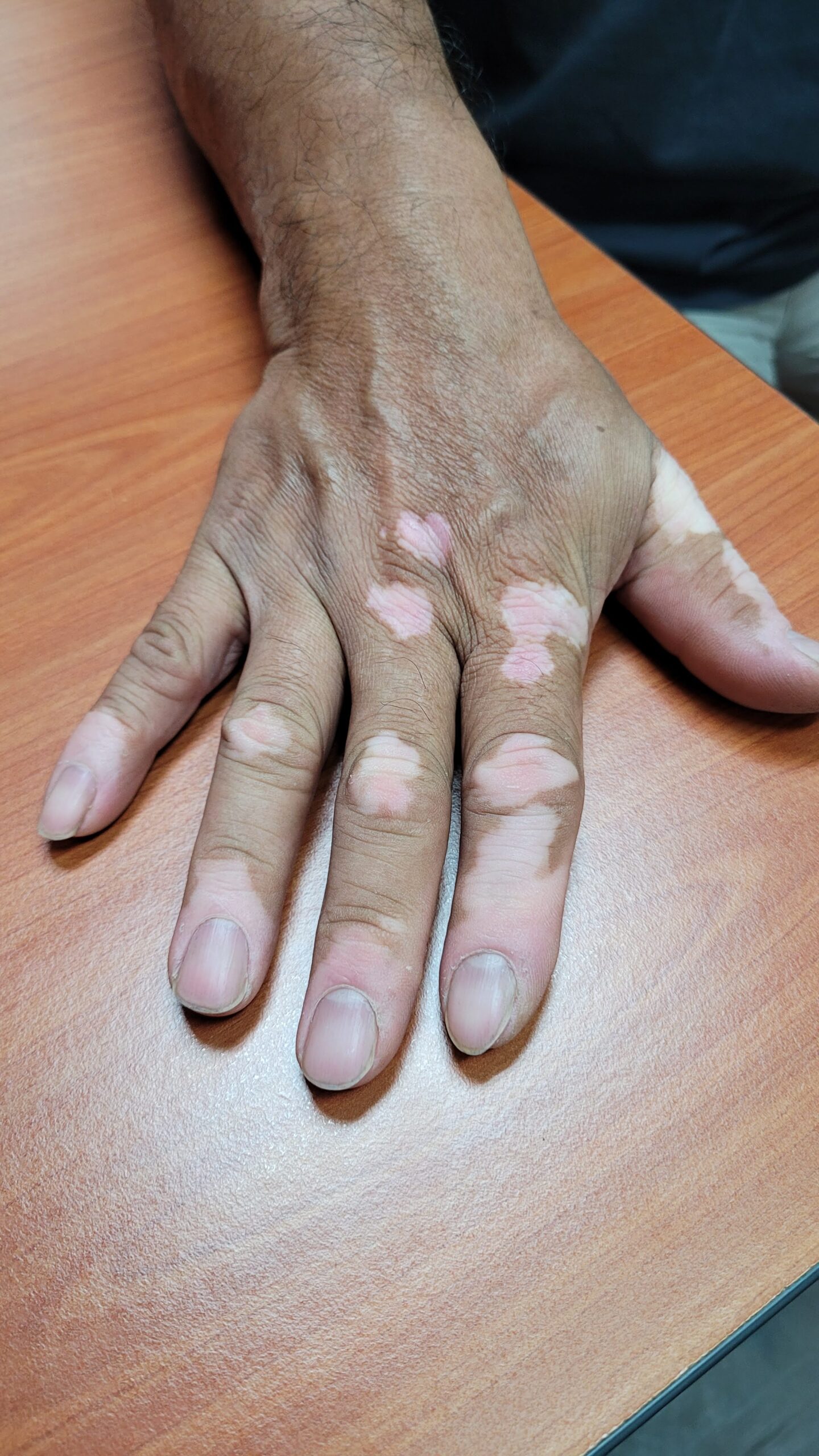
Regular follow-up with a dermatologist is important to assess improvement, monitor side effects and determine whether treatment should be continued or adjusted.
6. What Are the Side Effects of Ruxolitinib Cream?
Ruxolitinib cream was generally well tolerated in the vitiligo clinical trials, but side effects can occur. Reported adverse effects include acne at the application site, itching and other local skin reactions.
The prescribing information also includes warnings concerning serious infections, malignancy, cardiovascular events, thrombosis and other potential risks associated with JAK inhibitors. The extent to which risks observed with systemic JAK inhibitors apply to topical treatment is not fully established, but the warnings remain important.
A dermatologist should review your medical history, other medications and the area of skin requiring treatment before prescribing ruxolitinib cream.
7. Is Ruxolitinib Cream Available in Malaysia?
Ruxolitinib 1.5% cream (Opzelura) is an innovative topical treatment approved in the United States for non-segmental vitiligo. However, ruxolitinib cream is not yet registered with the National Pharmaceutical Regulatory Agency (NPRA) in Malaysia, and its Malaysian registration process is awaited.
In certain special clinical circumstances, access to an unregistered medication may be possible through the applicable special import or access mechanisms, subject to the relevant regulatory requirements and approvals. This is not routine access, and eligibility depends on the individual patient’s circumstances and the applicable procedures.
If you have vitiligo and wish to explore whether ruxolitinib cream may be an option, consult a dermatologist. Your dermatologist can assess your condition, discuss the potential benefits and limitations, and advise whether any appropriate access pathway is available.
For official information, visit the National Pharmaceutical Regulatory Agency (NPRA).
8. What Other Treatments Are Available for Vitiligo in Malaysia?
The most appropriate treatment depends on the extent of pigment loss, disease activity, affected body areas, previous treatments and the patient’s preferences. Treatment options may include:
- Topical corticosteroids: May help restore some pigment and control disease activity in selected patients. Prolonged or inappropriate use can cause skin thinning and other side effects.
- Topical calcineurin inhibitors: Tacrolimus or pimecrolimus may be considered, particularly for selected facial or sensitive areas.
- Narrowband UVB phototherapy: Uses controlled ultraviolet light to help restore pigment, especially when vitiligo affects larger areas or topical treatment alone is insufficient.
- Combination treatment: A dermatologist may recommend combining selected topical treatments with phototherapy where appropriate.
- Skin camouflage and sun protection: These can help reduce the visibility of patches and protect depigmented skin from sunburn.
Treatment does not always stop the condition from progressing, and repigmentation may not be permanent. A personalised treatment plan is therefore important. See how we approach vitiligo treatment and other pigmentation disorders at our clinic in Alor Setar, Kedah.
For more information, read the NHS guide to vitiligo treatment and the Mayo Clinic treatment guide.
Concerned About Vitiligo?
Consult our Consultant Dermatologist at Loh & Celine Skin Specialist Clinic, Alor Setar, Kedah, for an accurate diagnosis and a personalised discussion of established and newer treatment options.
WhatsApp Us Call 04-731 5711 Read Our Vitiligo Guide9. Frequently Asked Questions About Ruxolitinib Cream for Vitiligo
Can ruxolitinib cream cure vitiligo?
Is ruxolitinib cream better than steroid cream?
Can ruxolitinib cream be used on the face?
How long does ruxolitinib cream take to work?
Is Ruxolitinib Cream Available in Malaysia?
Ruxolitinib 1.5% cream (Opzelura) is an innovative topical treatment approved in the United States for non-segmental vitiligo. However, ruxolitinib cream is not yet registered with the National Pharmaceutical Regulatory Agency (NPRA) in Malaysia, and its Malaysian registration process is awaited.
In certain special clinical circumstances, access to an unregistered medication may be possible through the applicable special import or access mechanisms, subject to the relevant regulatory requirements and approvals. This is not routine access, and eligibility depends on the individual patient’s circumstances and the applicable procedures.
If you have vitiligo and wish to explore whether ruxolitinib cream may be an option, consult a dermatologist. Your dermatologist can assess your condition, discuss the potential benefits and limitations, and advise whether any appropriate access pathway is available.
Important: Do not purchase ruxolitinib cream from unverified online sellers. Always ensure that any medication obtained through a special access pathway complies with Malaysian regulatory requirements and is prescribed and supervised by an appropriate medical professional.
For official information, visit the National Pharmaceutical Regulatory Agency (NPRA).
Can ruxolitinib cream be combined with phototherapy?
Who should I consult for vitiligo treatment in Malaysia?
10. Conclusion: Is Ruxolitinib Cream a Promising Treatment for Vitiligo?
Ruxolitinib cream represents an important development in the treatment of non-segmental vitiligo. Clinical trials have demonstrated meaningful facial repigmentation in some patients, although treatment takes time and results vary.
For patients in Malaysia, access remains an important consideration because the cream is not yet registered with the NPRA according to the regulatory information available to our practice. In selected circumstances, an applicable special access pathway may be worth discussing with a dermatologist.
The best first step is to obtain an accurate diagnosis and discuss realistic treatment options with a qualified dermatologist. With appropriate guidance, patients can make informed decisions about managing vitiligo and protecting their skin. For a full overview of causes, diagnosis and every treatment option, read our complete vitiligo treatment guide.

Dr Loh Ken Chen
M.B.B.S. (Malaya), MRCP (UK), Advanced Master of Dermatology (UKM)
National Specialist Register (NSR) No. 133112
Dr Loh Ken Chen is a Consultant Dermatologist with extensive experience in medical and aesthetic dermatology. He previously served as Head of the Department of Dermatology at Hospital Sultanah Bahiyah, Alor Setar, and has clinical interests in psoriasis, eczema, acne, pigmentation and complex skin conditions. His approach focuses on accurate diagnosis, evidence-based treatment, and care tailored to each patient’s skin condition and needs.
Practises at: Kedah Medical Centre, Hospital Pantai Sungai Petani & Liv Skin Specialist Clinic.