
Psoriasis Treatment in Kedah: Clear, Healthy Skin Is Possible
Medically written and reviewed by Dr Loh Ken Chen, Consultant Dermatologist. Meet Dr Loh Ken Chen →
If you are always dealing with itchy, red, and flaky skin, you are not alone. Many people in Kedah face this problem and keep buying different moisturisers, but nothing works. At Loh & Celine Skin Specialist Clinic, we see many patients who are frustrated with their skin. Very often, what looks like “very dry skin” or a bad allergy is actually psoriasis. Psoriasis is a long-term problem with your body’s immune system, and you need proper medical care from a specialist to manage it.
What is Psoriasis?
To easily understand what is going on beneath your skin, let’s use a simple picture.
The “Little Soldiers” Analogy
Imagine your immune cells are like a group of brave little soldiers inside your body. Their only job is to protect you from bad guys like viruses or bacteria. But when you have psoriasis, these little soldiers get completely confused. They misrecognise your own healthy skin cells as dangerous enemies.
Because of this mistake, they start to attack your skin and “set fire” to the area, which causes the intense redness and burning inflammation. To protect itself from this fake danger, your body starts working in emergency overdrive to grow new skin cells at super-speed. Because they grow too fast, the dead skin cells have no time to shed normally. They pile up heavily on the surface, creating those thick, itchy, and silvery flaky patches.
Deep Dive: What You Need to Know
First of all, you must know that psoriasis is NOT infectious. You cannot catch it from someone else, and you cannot give it to your family by sharing towels or holding hands. It is entirely an autoimmune disease, which means your body is technically fighting against itself from the inside. Because the root cause hides deep in your immune system, normal skincare creams or over-the-counter beauty products cannot solve it. You need medical treatments that target these confused little soldiers.
Signs and Symptoms: How to Spot It
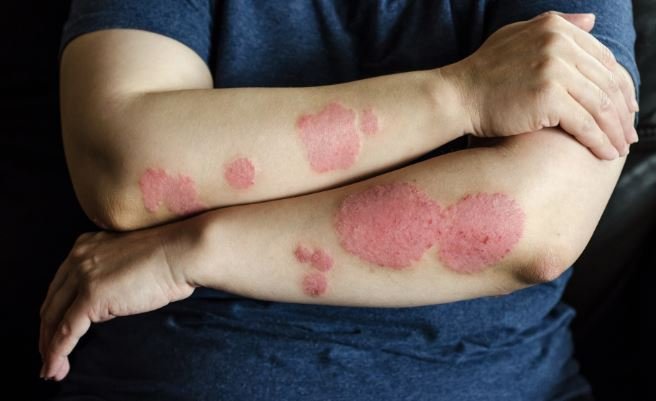
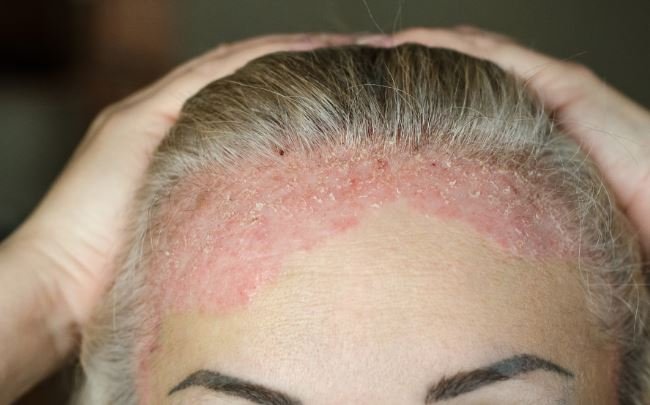
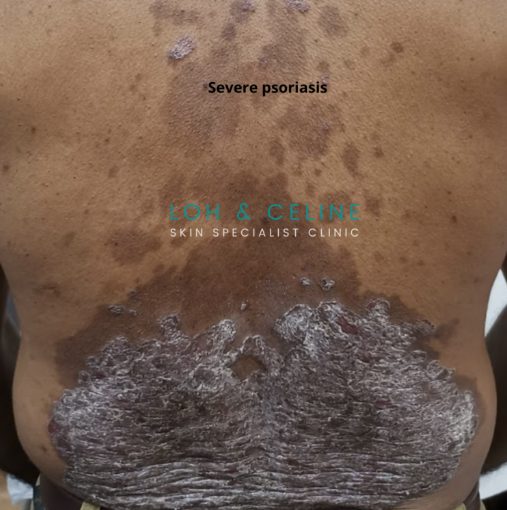
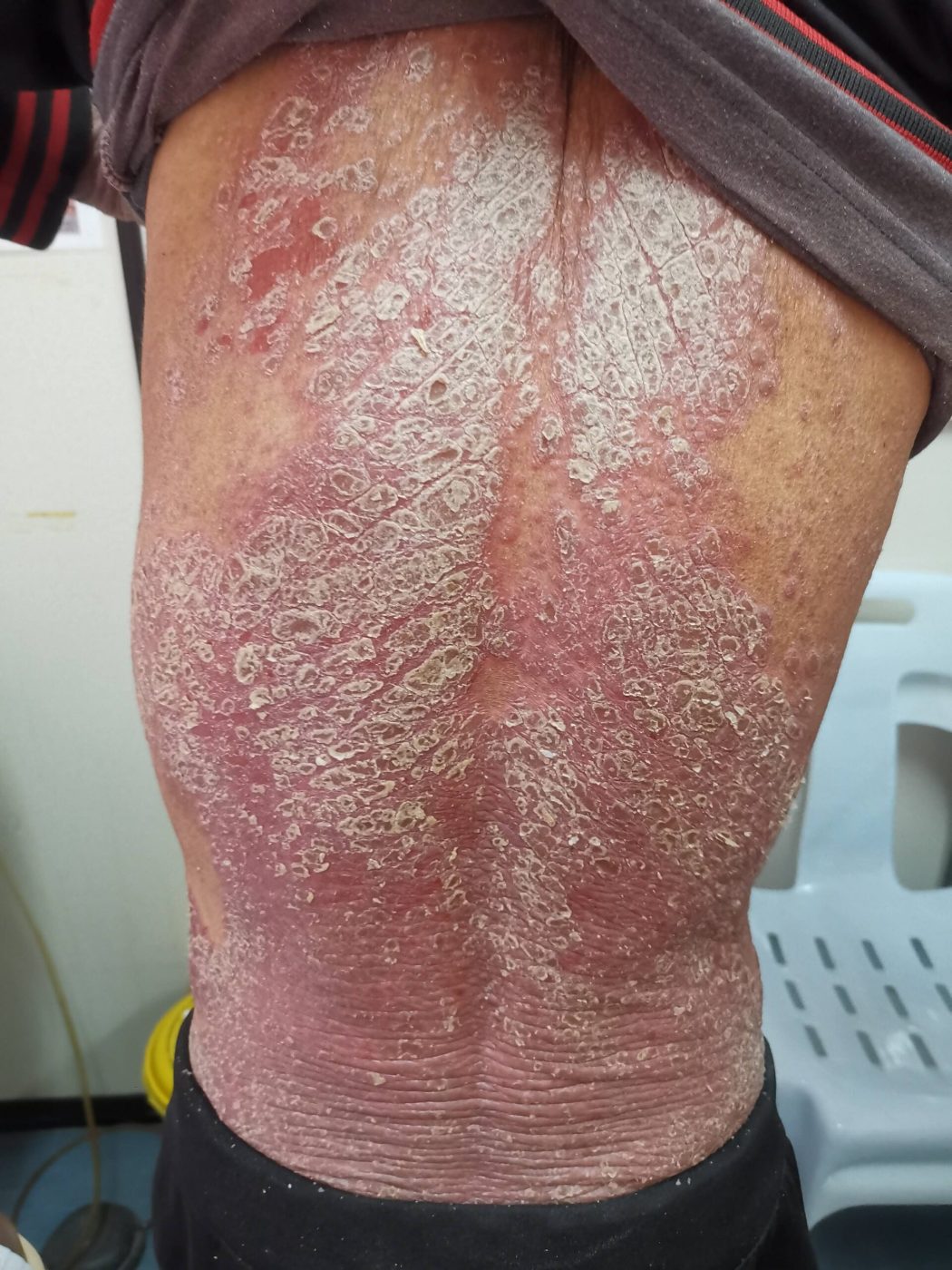
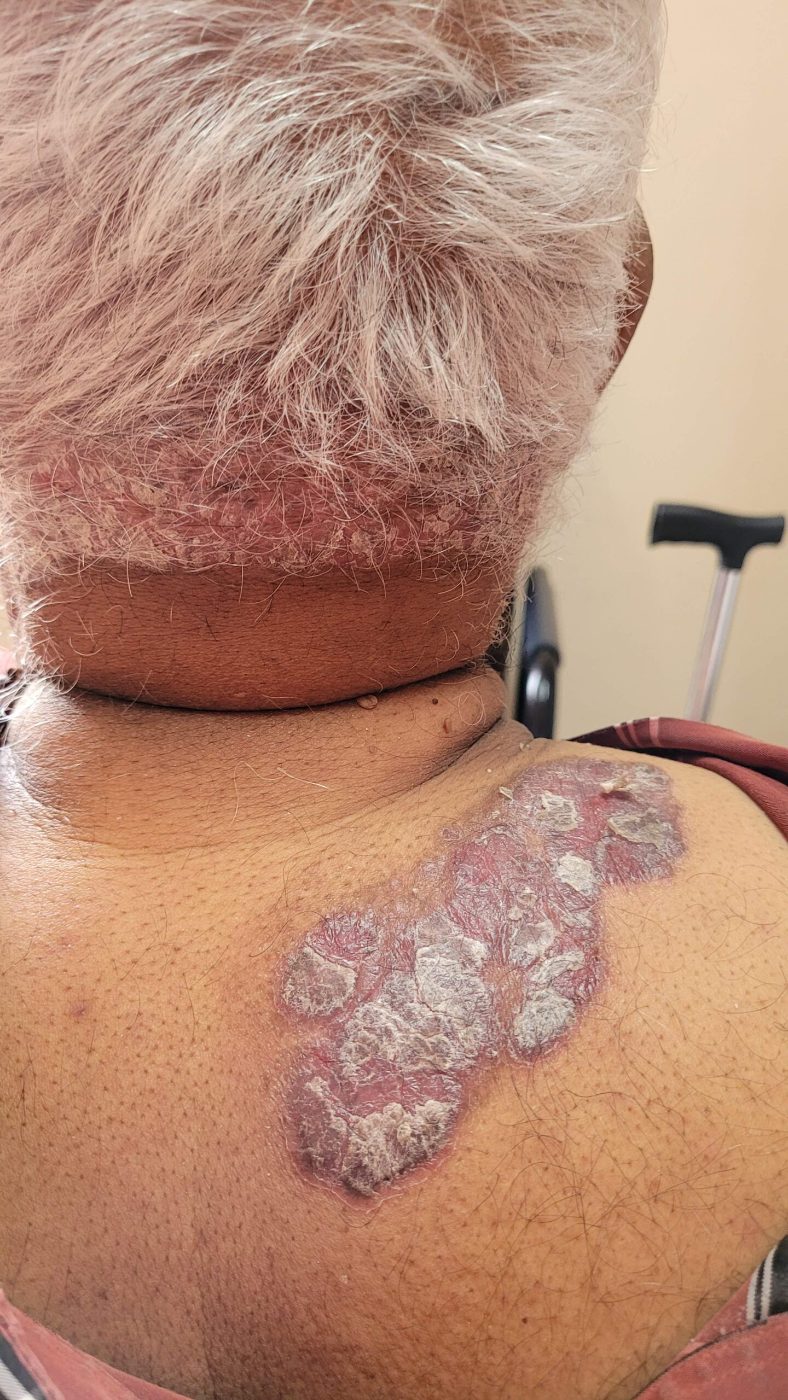
Psoriasis is not the same as ordinary eczema or dry skin. In our hot and humid Malaysian weather, sweating can make the itchiness and irritation feel much worse. Look out for these signs:
- Thick, red patches covered with silvery, flaky skin scales (plaques).
- Scalp Psoriasis: Very thick, heavy flaking on your head. Many patients mistake this for standard dandruff, but normal anti-dandruff shampoos won’t clear it because the cell buildup goes much deeper.
- Nail Symptoms: Dented (pitted), heavily thickened, crumbling, or yellowing fingernails and toenails, often misdiagnosed as a stubborn fungal nail infection.
- Joint Problems: Stiff, swollen, or painful joints, especially in the mornings. This can mean the inflammation is attacking your joints, a condition called Psoriatic Arthritis.
- Increased Cardiovascular Risk: Because psoriasis causes constant, hidden inflammation throughout your whole body, it doesn’t just stay on the skin. This systemic inflammation can damage your blood vessels over time, significantly increasing the risk of serious heart issues like heart attacks or strokes if left untreated.
More info: NHS UK (Psoriasis Overview & Clinical Guide)
How Do We Treat It? (Calming the Soldiers)
We cannot completely change your genetics, but modern medicine gives us amazing ways to calm your immune system down and fully clear your skin.
For mild cases, we start with creams applied directly to the skin. These include medical steroid creams, coal tar, or Vitamin D creams. They act like a temporary handbrake to calm down the specific spots where the skin is flaring up.
This treatment uses a special, safe medical UV light machine. Think of it like giving your skin a controlled, healthy dose of sunshine that tells the overactive skin factory to slow down its production line.
When creams cannot control the flare-up because it is too widespread, we use oral medications:
- Methotrexate: A reliable, long-standing medicine that stops skin cells from multiplying too fast.
- Apremilast: A newer pill that targets specific chemical signals inside your cells to turn down the inflammation.
If your psoriasis is moderate to severe, biologics are absolute game-changers. If traditional pills are like turning off the electricity to the whole factory just to stop one machine, biologics are like hiring a high-tech technician to turn off only that one broken switch. They specifically block the exact proteins causing the skin cells to go into overdrive.
- IL-23 Inhibitors (e.g., Risankizumab, Guselkumab): These target the main “boss” protein that starts the inflammation. They give very long-lasting clear skin, requiring an injection only once every 2 to 3 months.
- IL-17 Inhibitors (e.g., Secukinumab, Ixekizumab, Bimekizumab): These block the immediate proteins causing the skin redness and flaking, clearing skin remarkably fast.
- TNF-Alpha Inhibitors (e.g., Adalimumab, Infliximab): Excellent if you suffer from both skin psoriasis and painful, swollen joints.
Further reading: Mayo Clinic (Psoriasis Diagnosis & Treatment Guide)
Want to know which biologic injection schedule suits you best? Read our detailed guide on biologic treatment for psoriasis in Alor Setar for the full list of injection options and dosing schedules.
Stress: The Skin’s Biggest Enemy
When you are stressed, your body releases stress chemicals like cortisol. These chemicals act like pouring petrol onto a fire—they trigger a massive wave of inflammation that orders your skin factory to speed up even more. Taking care of your mind through relaxation techniques, gentle movement, and 7 to 8 hours of good sleep is just as important as putting on your creams.
To learn more about how stress directly impacts your immune system, read this WebMD guide on the stress impact on psoriasis.
Frequently Asked Questions
Tap a question to reveal the answer.
Take control of your skin health today. Contact Loh & Celine Skin Specialist Clinic to schedule your expert consultation.

Medical disclaimer: This article is intended for general educational purposes only and does not constitute medical advice, diagnosis or treatment. It is not a substitute for a professional consultation. Individual results and treatment suitability vary. Please consult a qualified dermatologist or your doctor regarding your specific condition before starting, changing or stopping any treatment.